
Matcha Cultivars
Matcha is often described through colour, grade or price.
Ceremonial. Culinary. Premium.
These terms can be useful. Yet they rarely explain the most important difference between one matcha and another: taste.
To understand flavour, it helps to look at the plant itself.
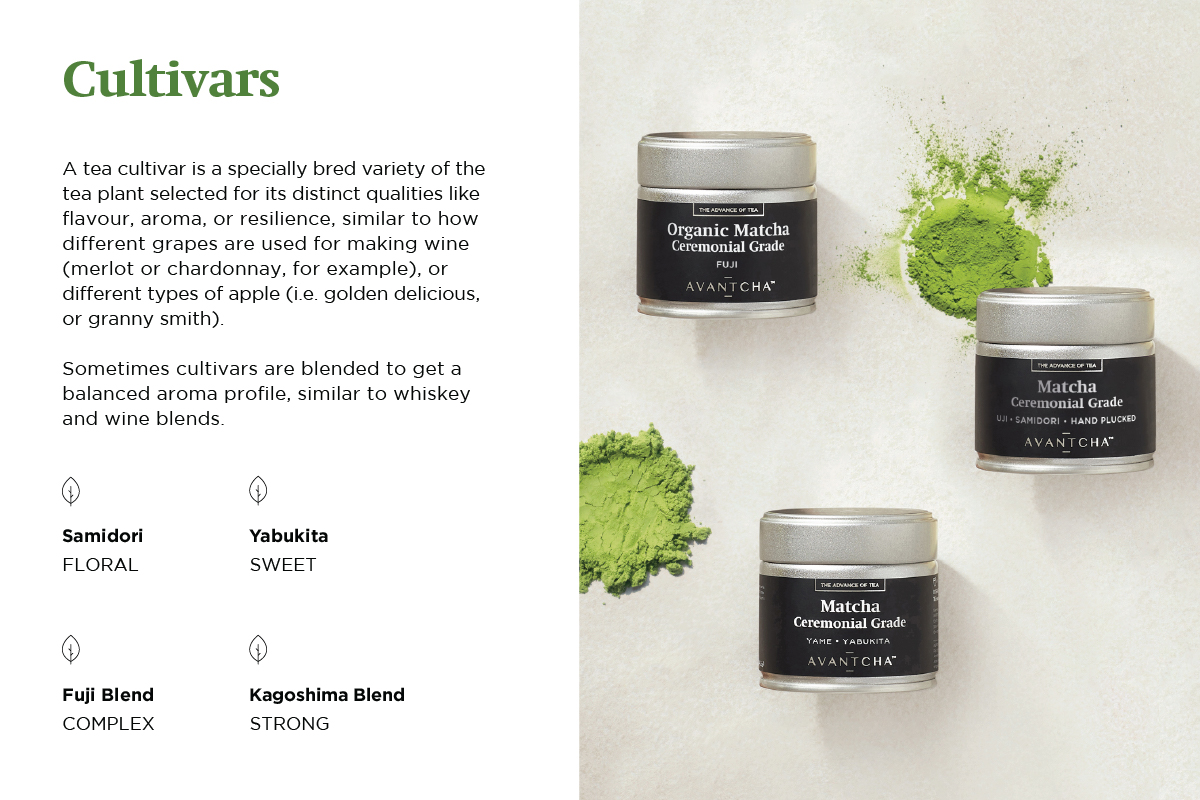
Just as wine comes from different grape varieties, matcha begins with specific cultivars of the tea plant (Camellia sinensis). Each cultivar expresses flavour, aroma and texture in its own way.
Cultivar defines personality.
Matcha Is Not a Cultivar
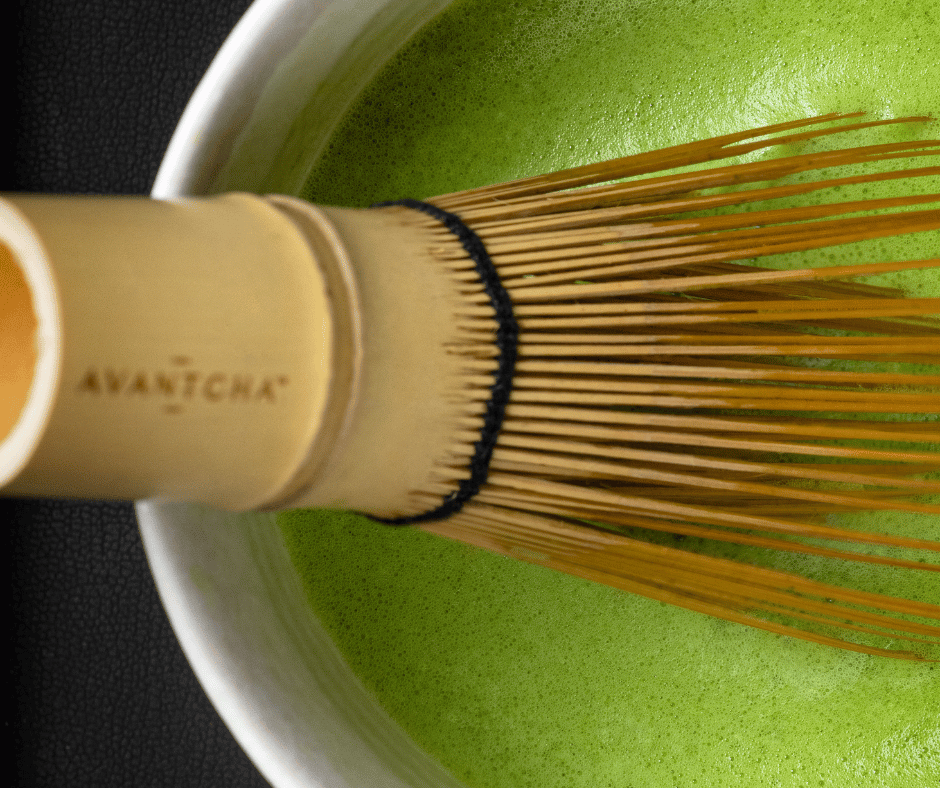
Matcha is not a type of tea cultivar. It is a method of preparation.
Tea leaves are shaded before harvest, steamed and processed into tencha, then slowly stone-ground into powder.
All tea comes from the same species, Camellia sinensis. Yet different cultivars produce noticeably different cups.
Japan has registered more than one hundred tea cultivars. Only a smaller number are commonly used for matcha production.
Each brings a different balance of sweetness, bitterness, umami and aroma.
The Whole Leaf is in the Cup
Cultivar matters in all tea. In matcha it matters even more.
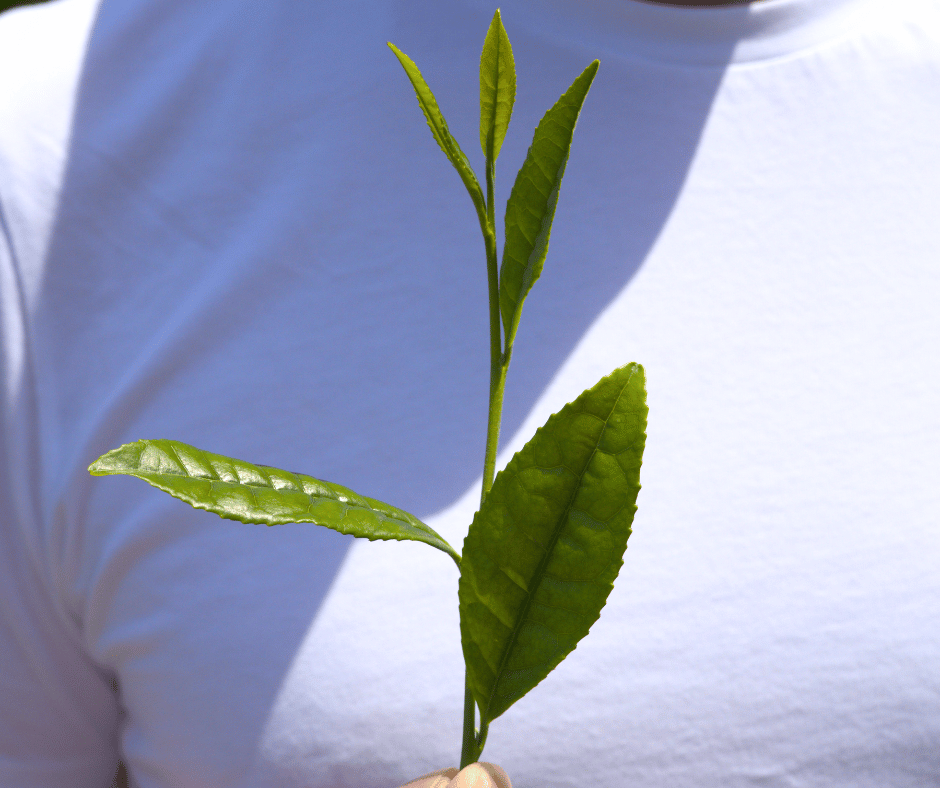
When drinking matcha, the entire leaf is consumed.
Sweetness, bitterness, texture and aroma are experienced directly. There is nowhere for the character of the leaf to hide.
For this reason, careful cultivar selection sits at the centre of refined matcha production.
-(1).jpg?w=2000&h=1333)
Where Matcha Is Grown
Cultivar defines personality. Place shapes how that personality is expressed.
Japan’s matcha comes from several key tea regions, each with its own climate, soils and tea traditions.
Uji, near Kyoto, is the historic heart of matcha culture. Many of Japan’s most refined ceremonial teas originate here, known for their balance, texture and umami.
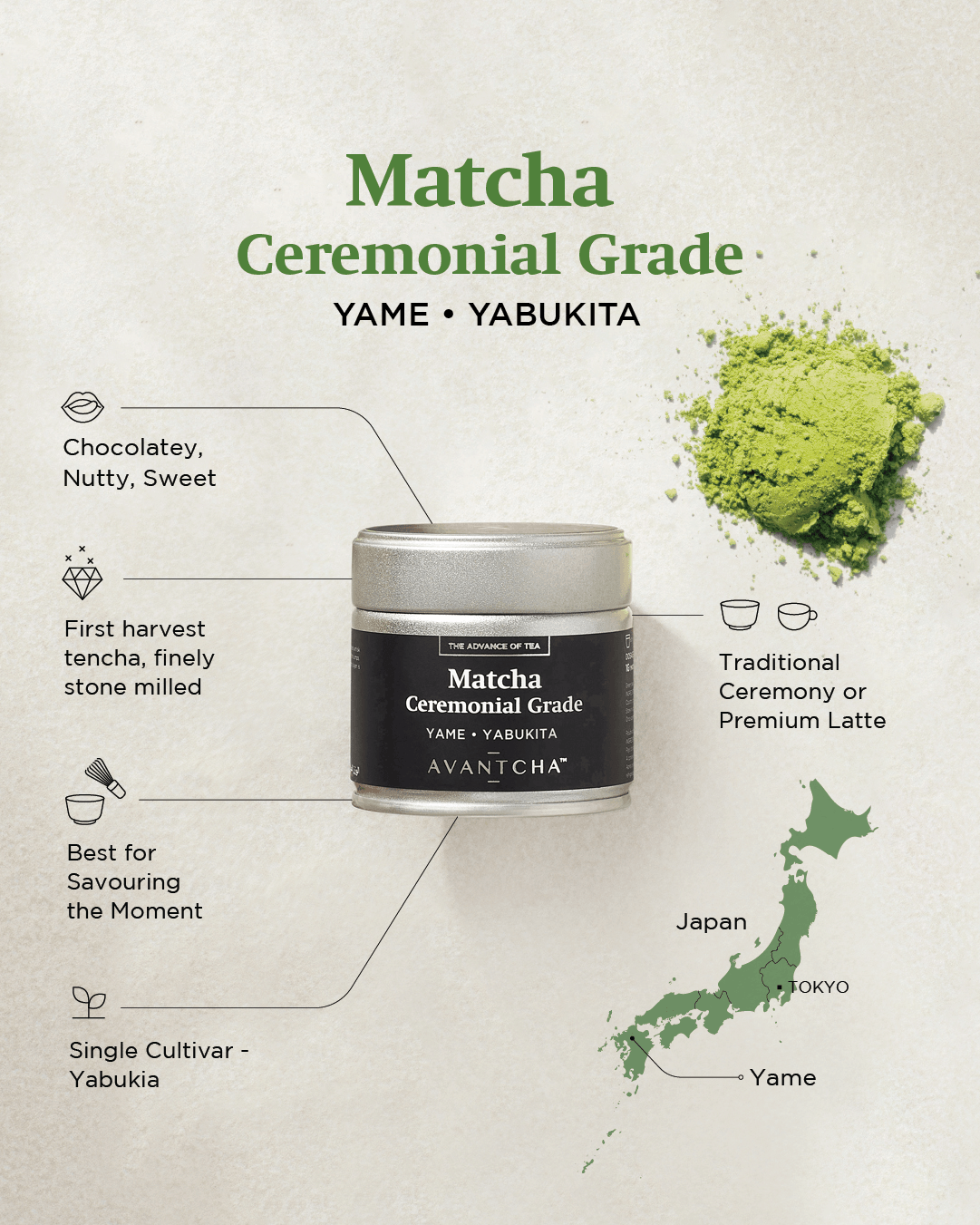
Further south, Yame in Fukuoka produces matcha with remarkable depth and sweetness. The cool mountain valleys and mineral-rich soils of the region create teas with powerful umami and a long, satisfying finish.
At the southern tip of Kyushu, Kagoshima has become increasingly important as global demand for matcha grows. Its warmer climate and volcanic soils produce teas that are bright, smooth and expressive.
The Yabukita Cultivar
Yabukita means “north of the bamboo grove” and is the most widely planted tea cultivar in Japan. It accounts for the majority of the country’s tea gardens.
The cultivar is resilient and reliable, originally favoured by farmers for its resistance to frost and consistent yields.
In matcha, Yabukita offers clarity and structure. Expect fresh green aromatics, gentle vegetal character and brisk umami.
Because of its balanced profile, it is frequently used in blends where it provides a steady foundation, though also makes an excellent single-cultivar matcha.
Discover AVANTCHA Ceremonial Grade Matcha Yame Yabukita
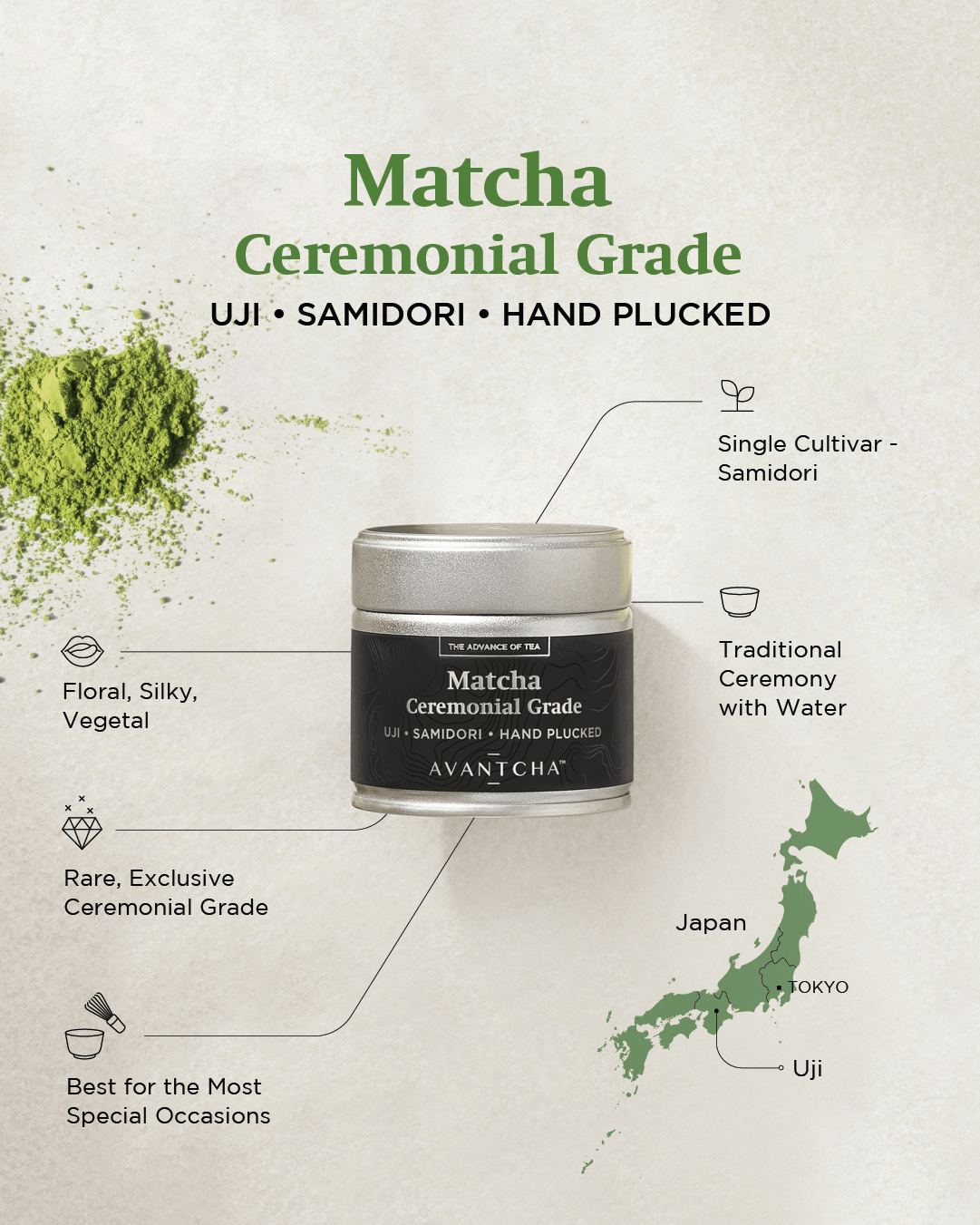
The Samidori Cultivar
Samidori means “pure green” and is another cultivar closely linked to the tea heritage of Uji.
It produces matcha with a thick, velvety body and pronounced umami. Natural sweetness balances the depth of flavour while bitterness remains minimal.
Samidori is also used in some of Japan’s finest gyokuro.
Discover AVANTCHA Platinum Ceremonial Grade Matcha Uji Samidori Hand Plucked
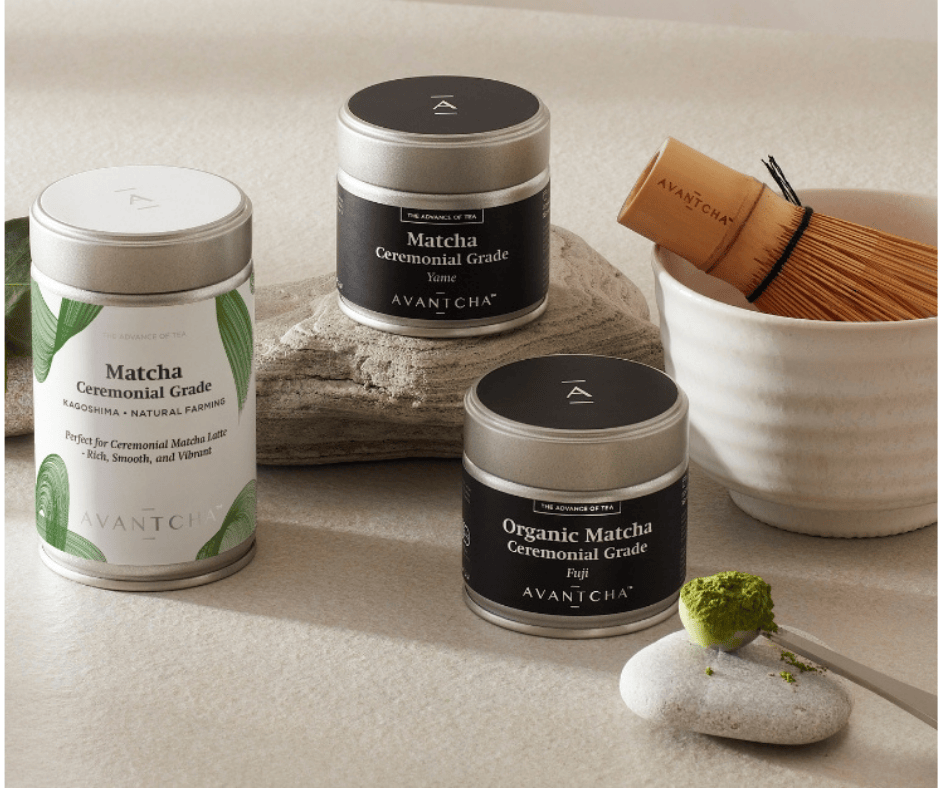
Blended vs Single Cultivar Matcha
Most matcha is blended.
Blending allows producers to balance flavour, colour and texture across harvests. A well composed blend can achieve harmony and consistency.
Single cultivar matcha offers a different experience. It allows the identity of one plant expression to come forward.
Both approaches are valuable.
Blends are composed for balance and consistency. Single cultivars reveal character.
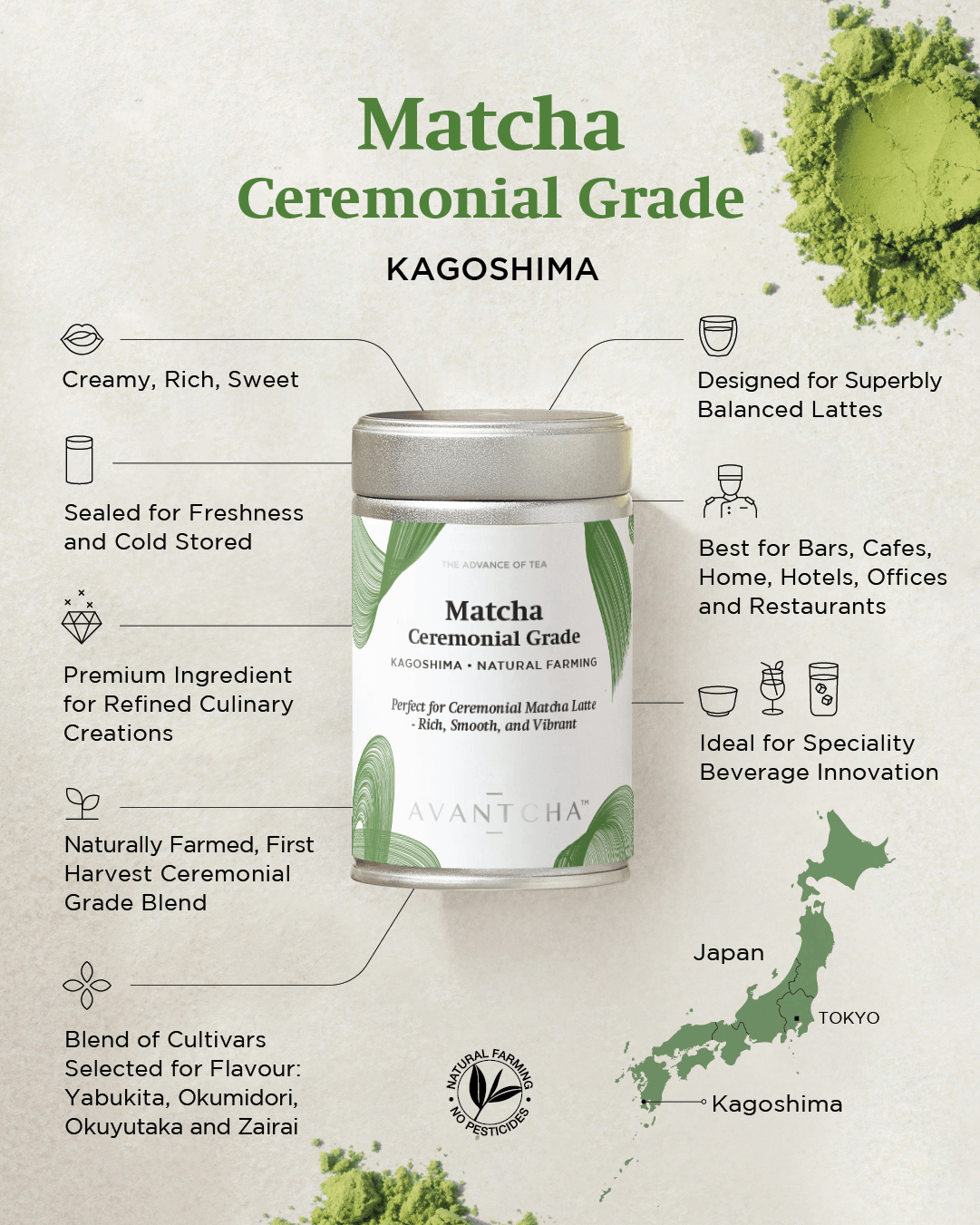
At AVANTCHA, blending is approached with the same level of precision as single-cultivar selection. Each blend is designed to express a clear flavour profile while maintaining consistency across time.
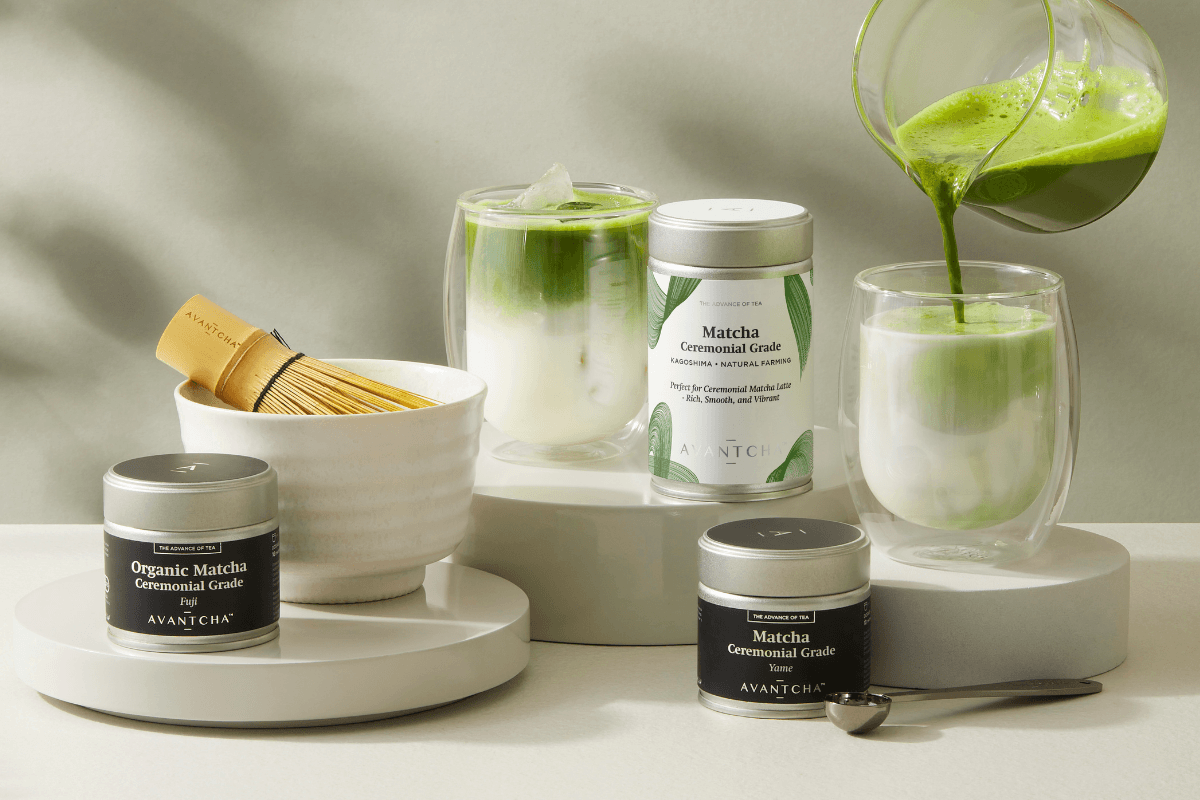
Our Matcha Ceremonial Grade Kagoshima Natural Farming is a carefully composed blend of cultivars grown in Kagoshima’s volcanic soils. The result is a bright, smooth and approachable matcha with gentle sweetness and a clean, balanced finish. Its natural farming approach reflects a commitment to minimal intervention, allowing the character of the leaf to come through with clarity.
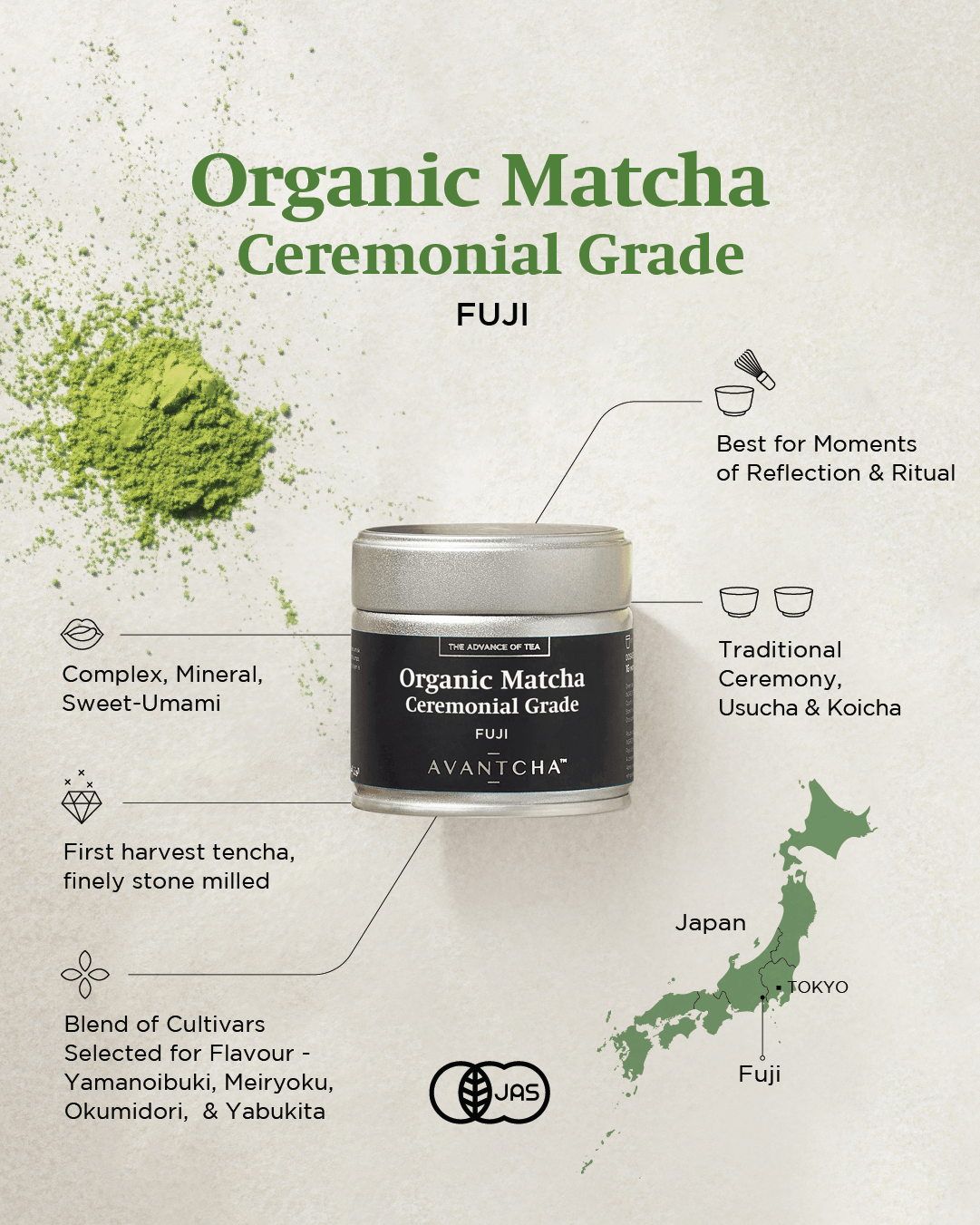
In contrast, our Organic Matcha Ceremonial Grade Fuji brings together organically cultivated leaves into a blend that emphasises structure and depth. Expect a fuller body, soft umami and a rounded profile, with a refined, lingering finish. The organic certification ensures that cultivation follows strict environmental standards, without compromising on flavour.
Both blends demonstrate that blending is not about dilution, but about composition. Much like a cuvée in wine, the goal is to create something harmonious, complete and consistent.
Choosing Matcha Through Taste
Understanding cultivar offers a different way to choose matcha.
Rather than relying on grade alone, it allows for a more precise alignment with flavour, texture and intended use. A softer, umami rich profile may suit traditional preparation, while a brighter, more structured matcha may perform better in lattes or culinary applications.
In this way, matcha moves beyond category and becomes an ingredient shaped by origin, variety and intent.

 All Rights Reserved. © AVANTCHA 2026